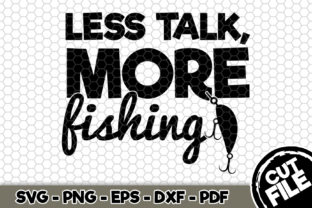
Less Talk More Fishing
As an embroidery designer and product reviewer, I often find myself evaluating digital files for real-world use. Less Talk More Fishing caught my attention not just for its clever message, but for how it translates into actual embroidery projects. This design is a straightforward, clean graphic that could work well in a variety of applications—though it’s not without its limitations.
The First Impression
From the moment I opened the file, Less Talk More Fishing felt like a design meant for simplicity and clarity. The layout is minimal, with a bold text style that suggests a casual, laid-back vibe. It’s not overly detailed, which makes it ideal for quick embroidery projects where less is more. The theme fits naturally into outdoor, fishing, or lifestyle-themed products—perfect for handmade shops or custom apparel businesses looking to add a touch of personality to their offerings.
The design has a visual personality that leans toward relaxed, unpretentious charm. It doesn’t scream for attention, but it does stand out in a subtle way. That makes it a good fit for items like tote bags, sweatshirts, or baby onesies where the design should complement the overall aesthetic rather than dominate it.
Real-World Embroidery Performance
When I tested Less Talk More Fishing on different fabrics, it performed best on flat, smooth surfaces. It worked well on cotton tote bags and sweatshirts, where the stitch density was consistent and the lettering remained clear. However, on textured or stretchy materials, the design occasionally lost some definition, especially around the edges of the letters.
This design isn’t ideal for small hoop sizes. The text is relatively large, and trying to fit it into a 4x4 inch hoop would require scaling down, which can lead to loss of detail. For best results, a larger hoop (5x7 or 6x10) is recommended, especially if you're working on a project like a patch or a larger item like a pillow cover.
On dark fabrics, the design’s contrast is slightly muted. If you’re planning to use it on black or navy, consider using a lighter thread color to ensure visibility. On light-colored fabrics, the design looks sharp and clean, making it a solid choice for white t-shirts, linen towels, or other bright backgrounds.
Where to Use It Carefully
While Less Talk More Fishing is versatile, there are certain situations where it might not be the best fit. For example, it doesn’t work well on thin or stretchy fabrics like spandex or lightweight knits. The design tends to pucker or distort when stitched onto these materials, especially if the stabilizer isn’t properly applied.
It also isn’t suited for curved surfaces like caps or hats. The text is linear and doesn’t bend easily, so it may look awkward when placed on a rounded area. Similarly, the design’s lack of intricate details means it won’t hold up well in dense stitch areas or on complex patterns where multiple elements overlap.
If you're planning to use this as part of a layered design or alongside other embroidered elements, you’ll need to be careful about how it interacts with surrounding stitches. It works best as a standalone piece rather than a component in a more elaborate composition.
Impact on Visual Appeal and Customer Perception
Less Talk More Fishing adds a sense of authenticity to any project it’s used on. Its simple, clean look gives a handmade feel that resonates with customers who value quality and craftsmanship. When used on a custom tote bag or a personalized gift, it enhances the overall appeal by providing a clear, meaningful message without overwhelming the design.
For small business owners and Etsy sellers, this design offers a practical option for creating unique, sellable items. It’s easy to customize, and the clean layout makes it suitable for both personal and commercial use. However, it’s important to test it thoroughly before offering it as a finished product, especially if you're selling it as a digital embroidery file or a printable mockup.
Customers often respond positively to designs that are easy to understand and visually pleasing. Less Talk More Fishing delivers on both fronts, making it a strong candidate for items like holiday gifts, wedding favors, or boutique merchandise. Its simplicity also makes it highly recognizable, which is a big plus for branding and consistency across different product lines.
Practical Designer Notes
Before using Less Talk More Fishing in any project, I always recommend testing it on scrap fabric. This helps identify any issues with stitch density, thread color contrast, or fabric compatibility. It’s also a good idea to review the design in both black and white and color mockups to see how it looks under different conditions.
When working with this design, pay close attention to the stabilizer. Using the right type can make a big difference in how the final product looks, especially on delicate or stretchy materials. If you're planning to use it on a layered garment or a curved surface, consider adjusting the design or using a different file format that allows for better shaping.
Lastly, always check the licensing terms before selling anything that includes Less Talk More Fishing. Even though it's a simple design, it's important to ensure that you have the proper rights to use it in commercial settings or as part of a digital product.
Final Thoughts
Less Talk More Fishing is a solid choice for designers looking for a clean, functional embroidery file that can be used in a variety of applications. It’s not the most intricate design, but it’s effective and easy to work with. Whether you're creating custom apparel, personalized gifts, or small shop merchandise, this design has the potential to add value and appeal to your offerings.
As with any machine embroidery design, the key to success lies in understanding its strengths and limitations. With the right approach, Less Talk More Fishing can become a reliable asset in your creative toolkit.